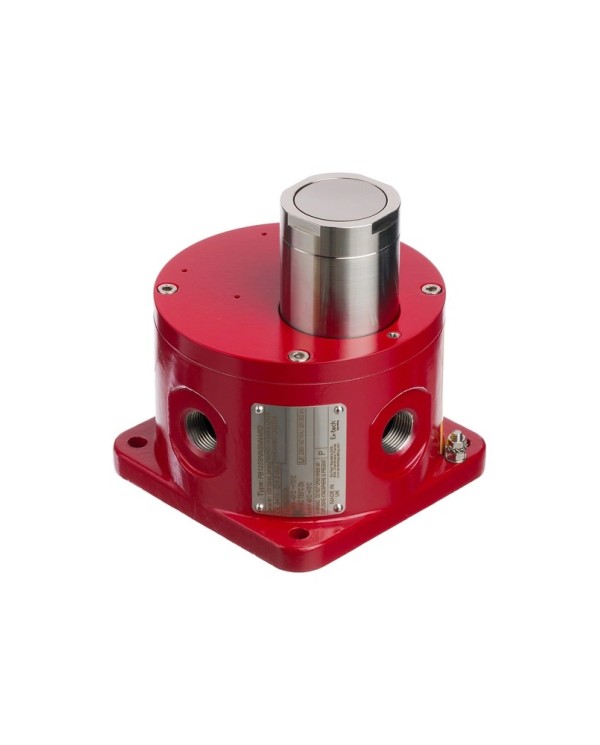
This page includes the main information concerning ozone (O3) or "trioxygen" its physical characteristics, its effects on health, the means to detect it (gas detector O3) as well as adapted respiratory protection equipment (gas mask or a ventilation device with Combined Filter Type Abekhg-P3).
Key characteristics of ozone (O3)
Present naturally in the atmosphere, the " trioxygène (O3) better known as ozone is a naturally cleared gas by the release of nitrogen oxides (NOx). On the industrial scale, ozone is produced by electric discharges in tubular generators. It is found in the treatment of water for its oxidizing properties (ozonization of water) but also in the printing stores (laser radiation) and arc welding activities with inert gases.
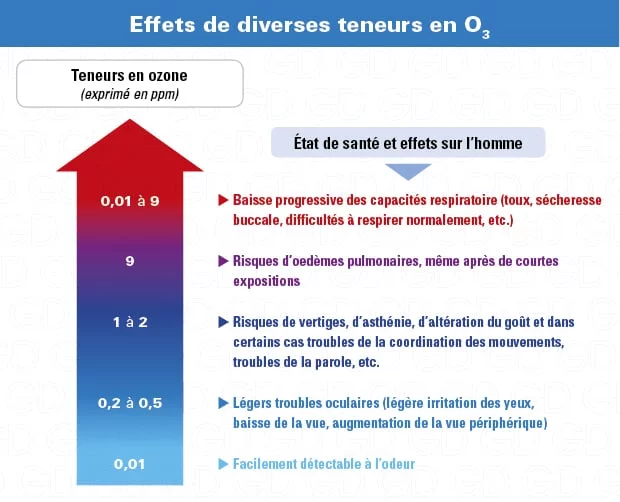
Effects of ozone on health
The'Ozone (O3) is a gas ranging from colorless to bluish color with a pungent odor recalling bleach, detectable from 0.01 ppm. Non-flammable, the ozone has a strong oxidizing, which can be source of explosions. Although its toxicity depends on several factors (temperature, pressure, concentration), ozone is a very harmful gas for the respiratory tract (lungs, nose and throat) and irritating For eyeways.
GAS DETECTION O3 (OZONE)
Although ozone either an odorous gas, only an o3 gas detector can accurately measure the concentrations of this extremely toxic gas, we will be directed towards a Ozone fluoride detection Portable or fixed in ppm.
Ozone is an irritating gas, so we will move towards a complete mask for short-time interventions or to an assisted ventilation device (more comfortable) with combined Filters type ABEKHG-P3. If the concentrations exceed 60 times the VLEP, an insulating respirator will be imperative.
check_circle
check_circle
Nous utilisons des cookies tiers pour améliorer votre expérience de navigation, analyser le trafic du site et personnaliser le contenu et les publicités. En savoir plus